SPV MARKETPLACE

ALLOCATIONS 2021/ 2022

Allocations

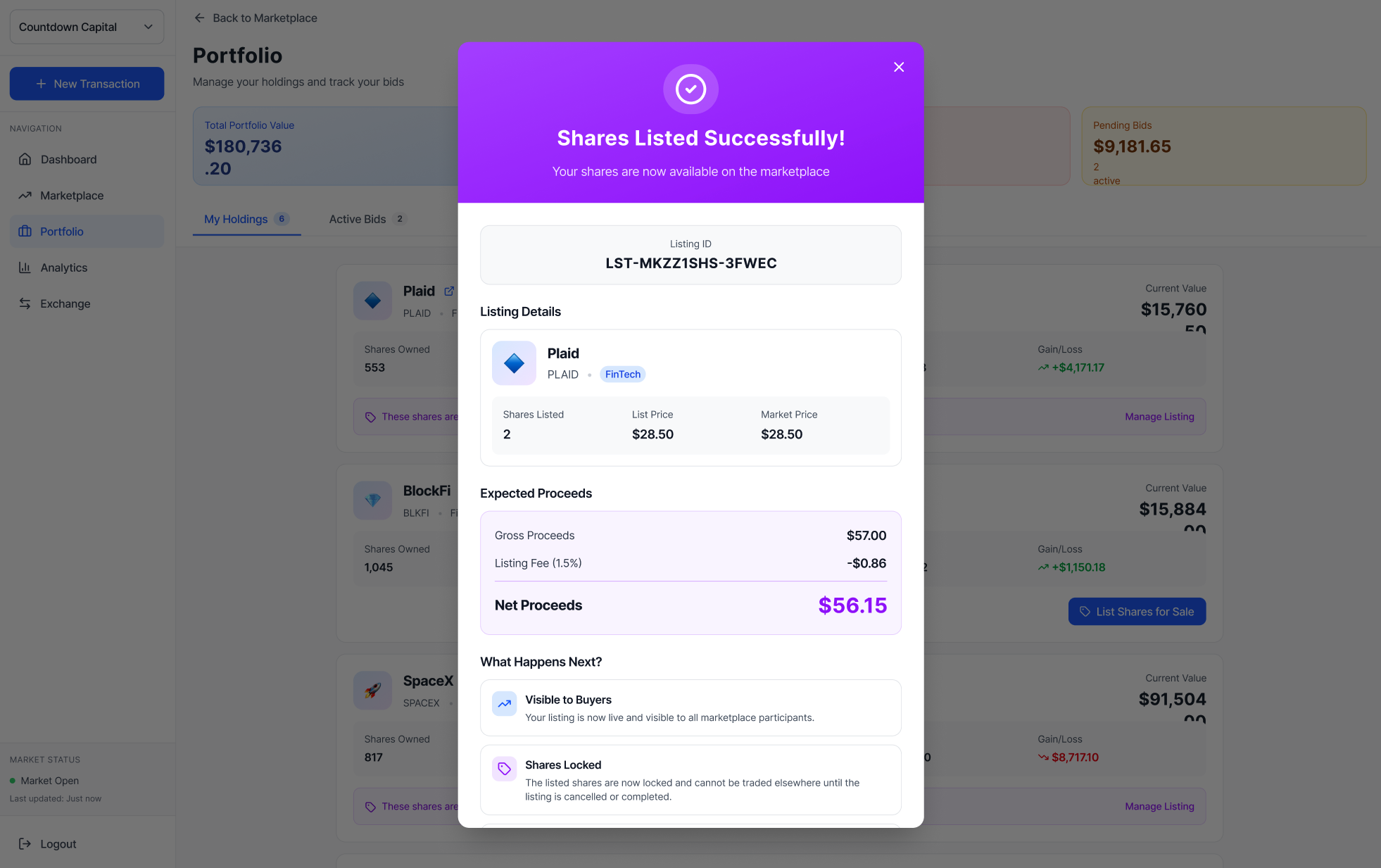
Private equity investors at Allocations had no way to exit positions or buy secondary shares without leaving the platform entirely. I designed the Exchange Marketplace from zero as the first internal solution for buying, selling, and transferring ownership of private company shares.

OVERVIEW

GOAL

Design a marketplace for investors to buy and sell shares of private companies

MY ROLE

Product Designer

TASKS

UX/UI Design

Wireframing

User Research

Prototyping

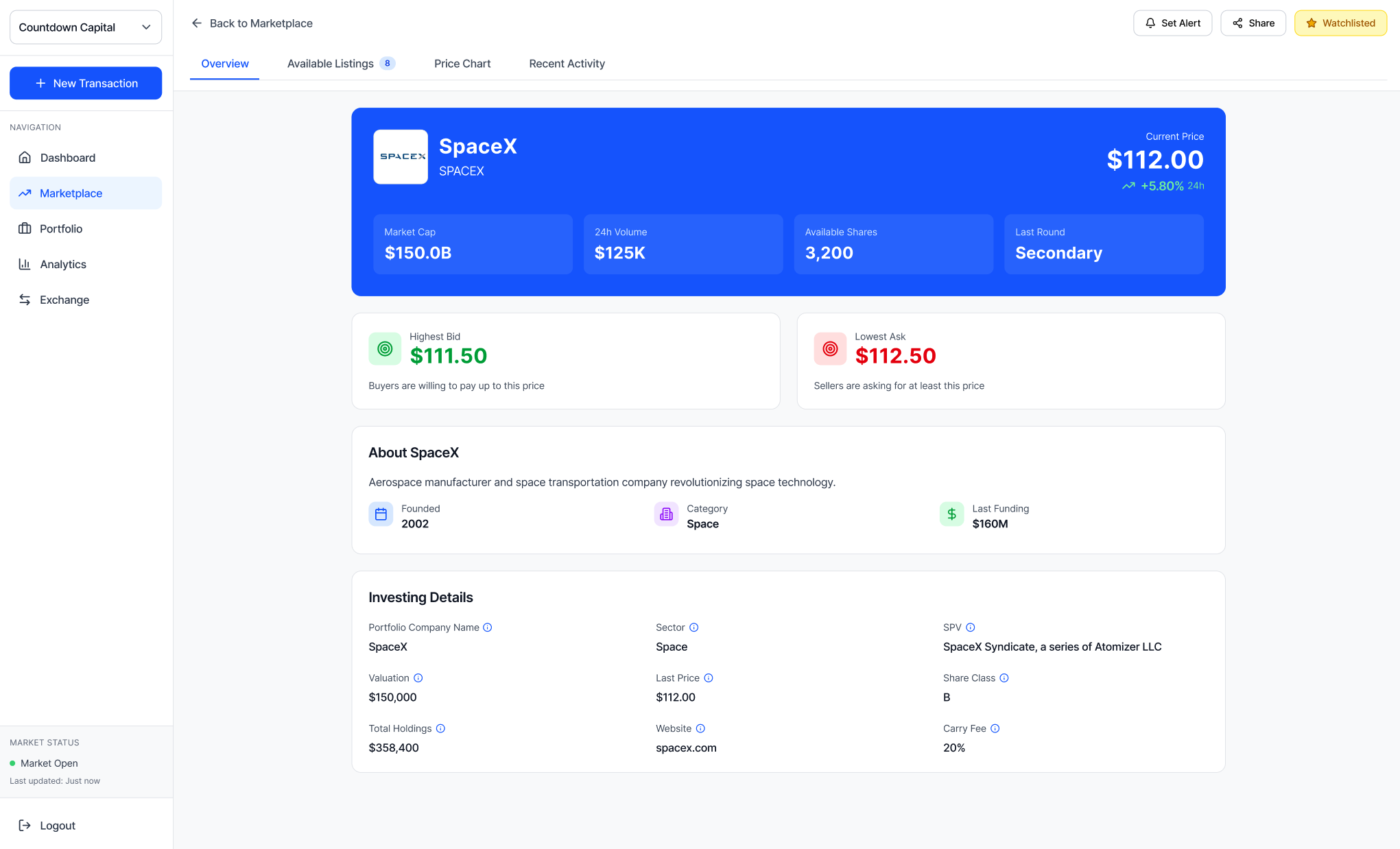
Allocations SPV Marketplace

Background

Secondary transactions in private equity are complex by nature: they involve legal transfer of ownership, multiple parties negotiating price, and compliance documentation. Allocations users were managing all of this through email threads and external tools, a fragmented process that introduced delays, errors, and drop-off.

The temptation was to build a simple listing board: post a share, set a price, done. That model works for liquid public markets. In private equity, price discovery is negotiated. There's no market rate for a stake in a private company. A fixed-price listing would have failed to match how these transactions actually work.
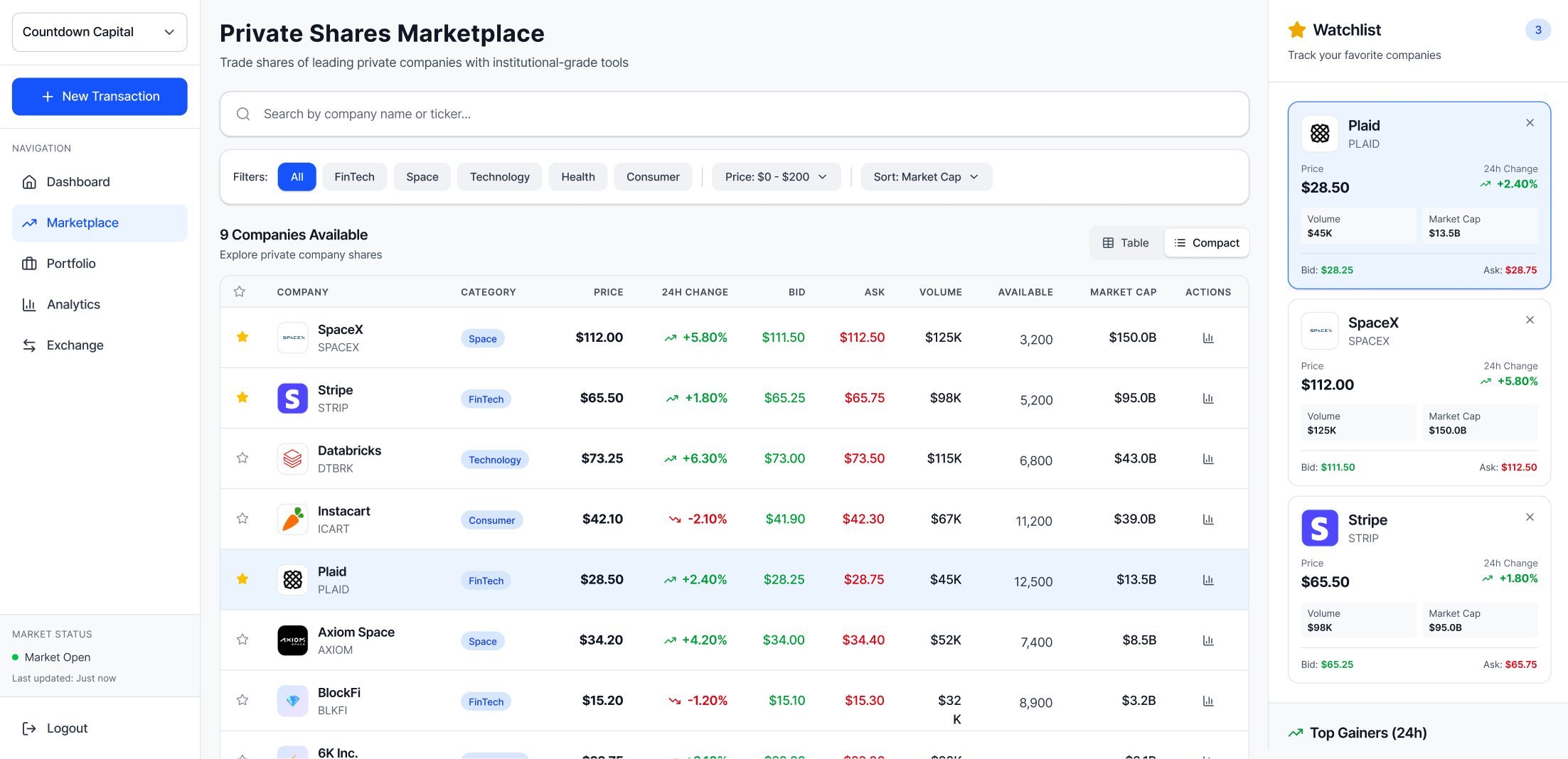
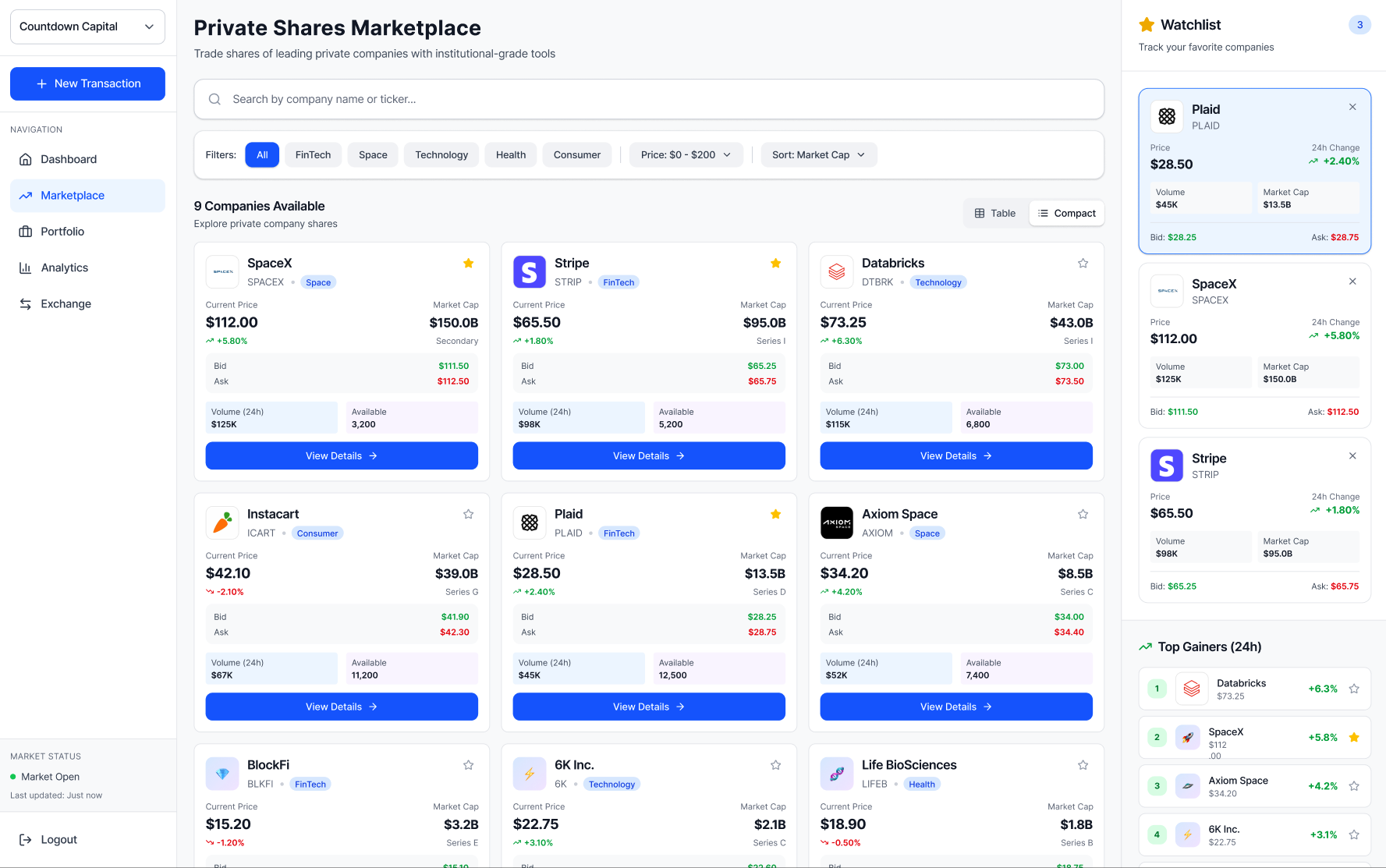
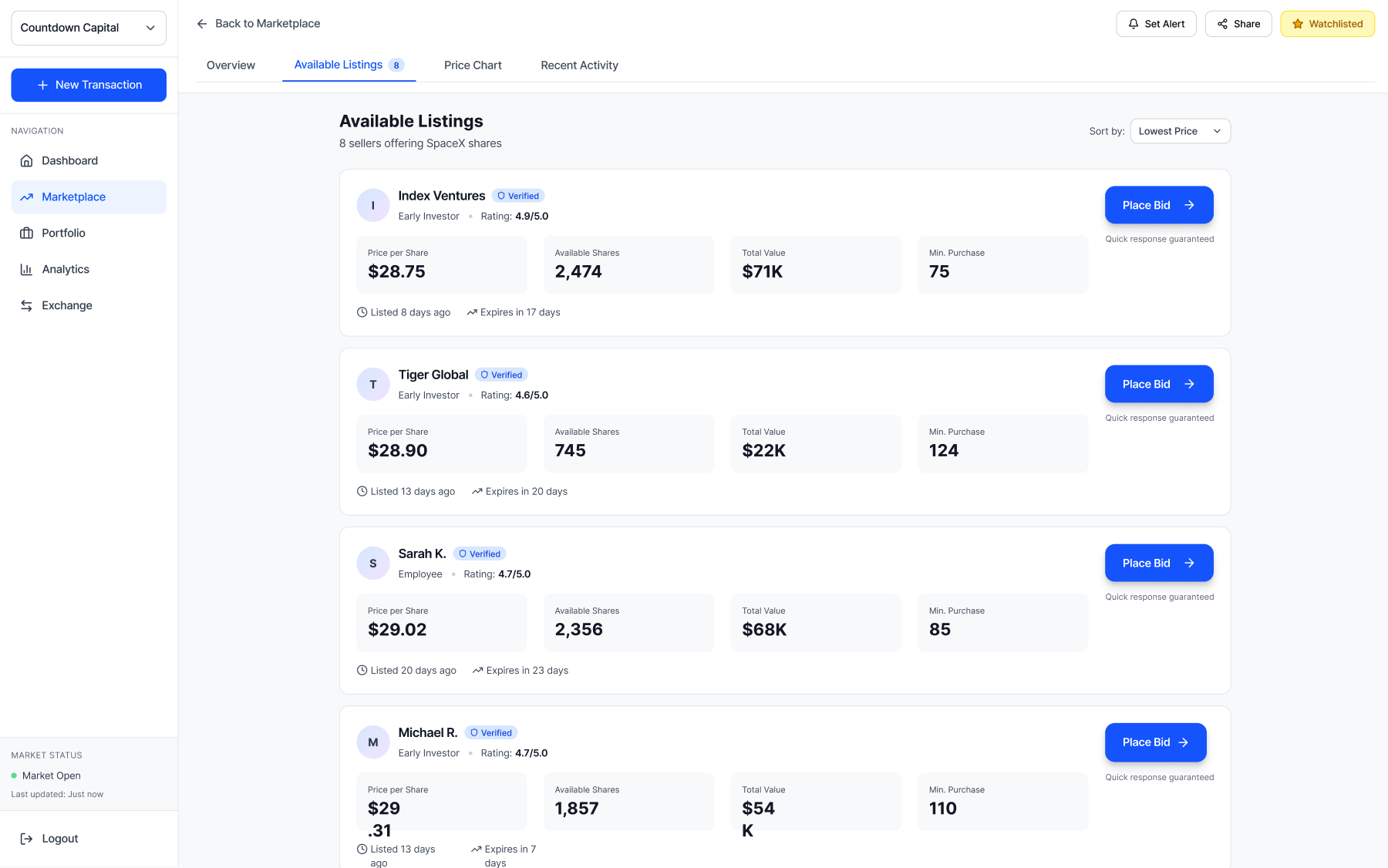
Allocations Marketplace Allocations Details

Approach

The core design decision was building around a bid/counter-offer model rather than fixed pricing. This matched the mental model investors already had for private transactions while keeping the flow contained within the platform. Each step (browse, select, bid, negotiate, sign) was scoped to reduce the number of decisions required at each stage so users could move through a complex transaction without feeling overwhelmed.

Card-based discovery let users scan by sector and company quickly. The transaction modal surfaced only what was needed to place a bid, deferring full documentation until both parties agreed. E-signature at the end closed the loop without requiring external tools.

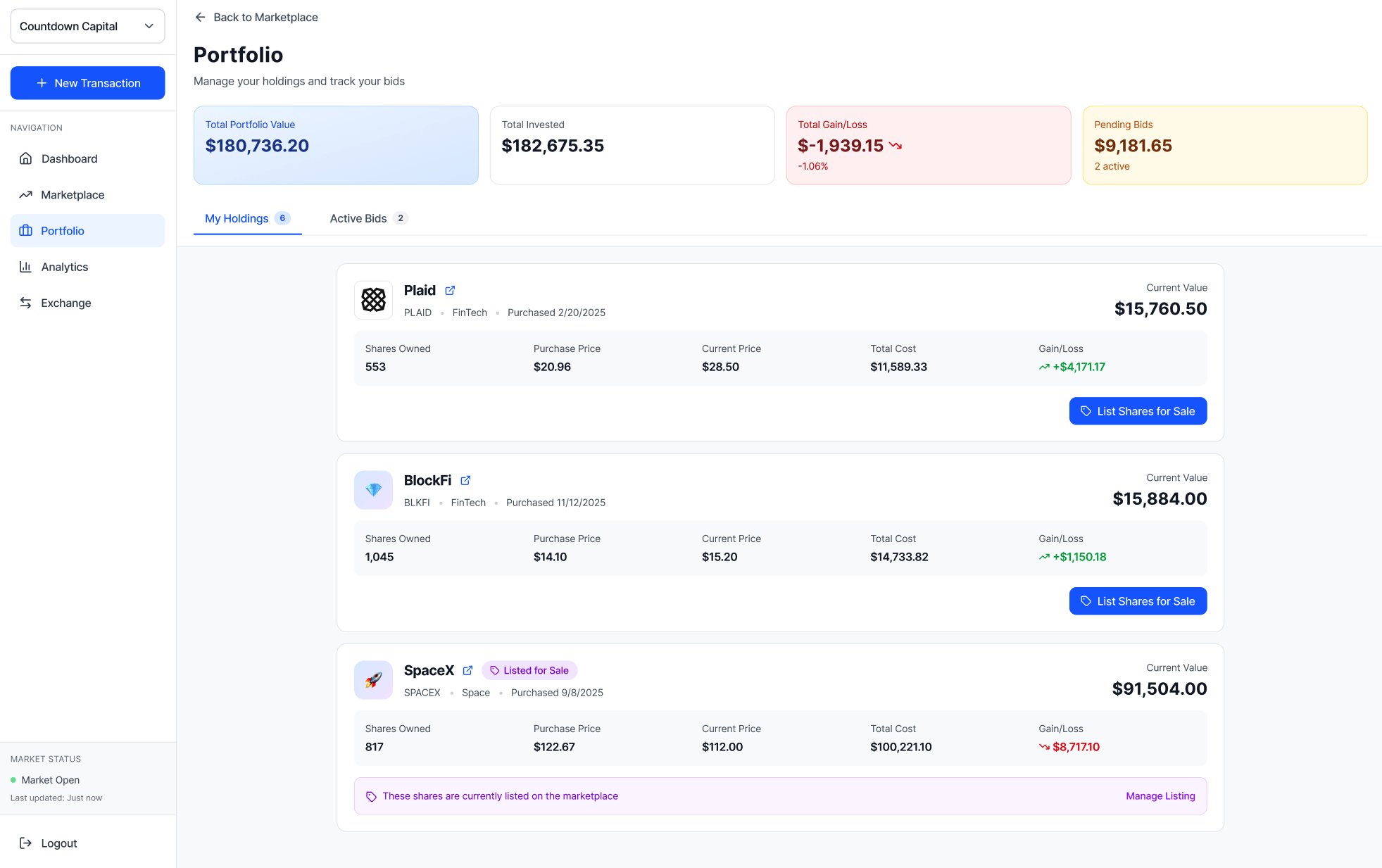
The hardest UX problem was post-transaction state: once a deal closed, what happened to each party's view? We designed an automatic card migration where bought shares moved into Holdings and relisting was a single action. This reduced the cognitive overhead of managing a growing portfolio of secondary positions.

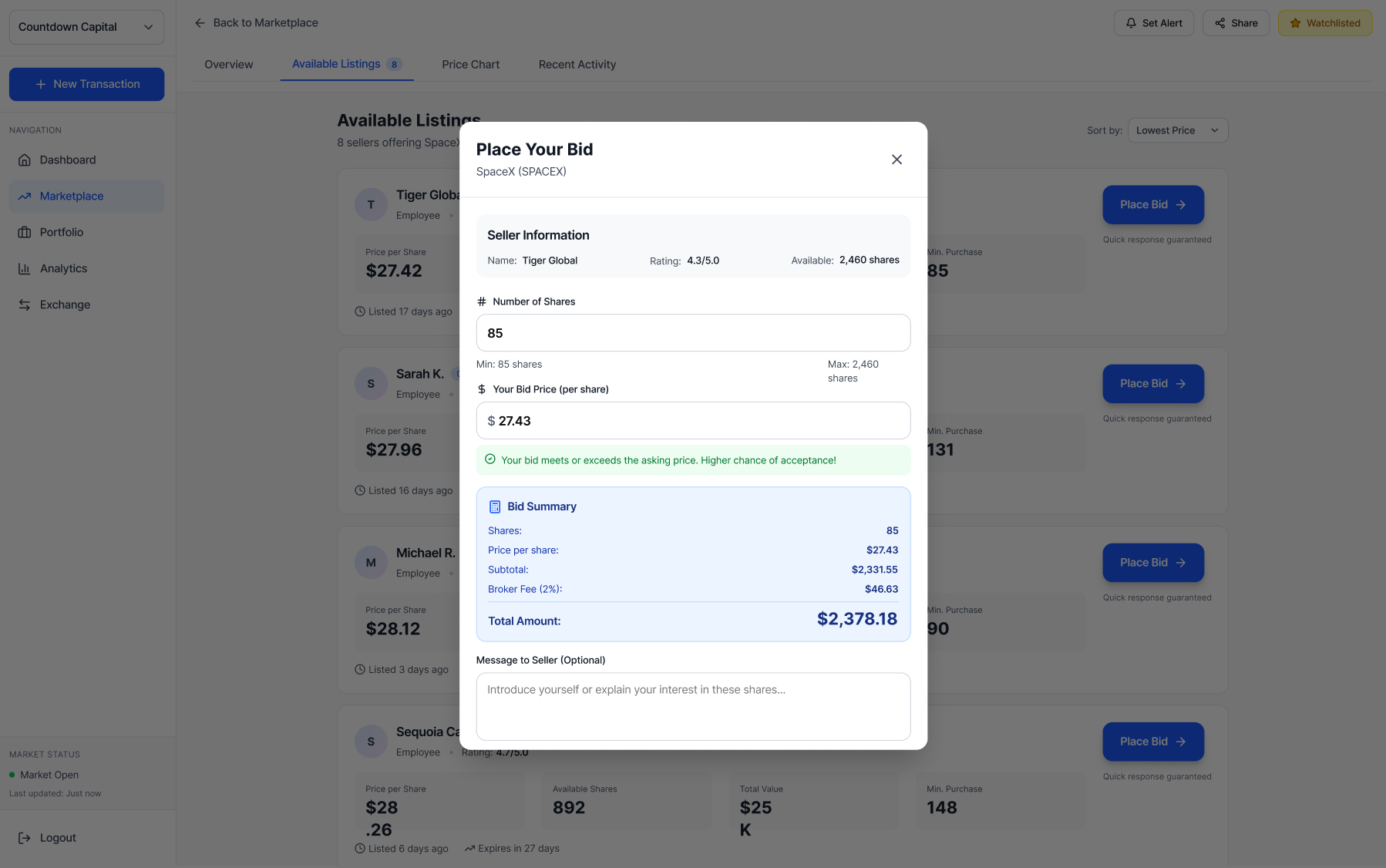
Allocations Order Flow Allocations Transaction

Once a buyer selects a company they're interested in, a modal appears displaying comprehensive information about the investment opportunity. This includes detailed company insights, full investment terms, and input fields where users can place a purchase order by specifying the quantity of shares and their desired price. The goal was to streamline the transaction process while giving users the context and control needed to make confident investment decisions.

Allocations Orders Allocations Holdings

Once a bid is submitted, the seller has the option to either accept the offer and initiate the transfer of ownership or respond with a counteroffer at a different price per share. After both parties agree on a final price, they electronically sign the transaction documents, officially completing the transfer of ownership to the buyer. Once finalized, the company card is automatically moved to the appropriate tab for each user, allowing the buyer to seamlessly relist the shares within the platform if they choose to sell in the future. Users can easily manage their activity under the "Orders" section, which includes tabs for "Current Bids" and "Current Listings," while the "Holdings" section organizes their "Purchased" and "Sold" shares for quick reference and ongoing portfolio management.

Impact

Ownership Transfer 78% Decrease in time
Dealflow 340 New deals
Fund Creation 20 New Funds